Which Wellness Services Could Complement a Beauty Salon?
Explore complementary wellness service categories, from quiet relaxation appointments to qualified-provider services and equipment-based experiences.
Sources reviewed
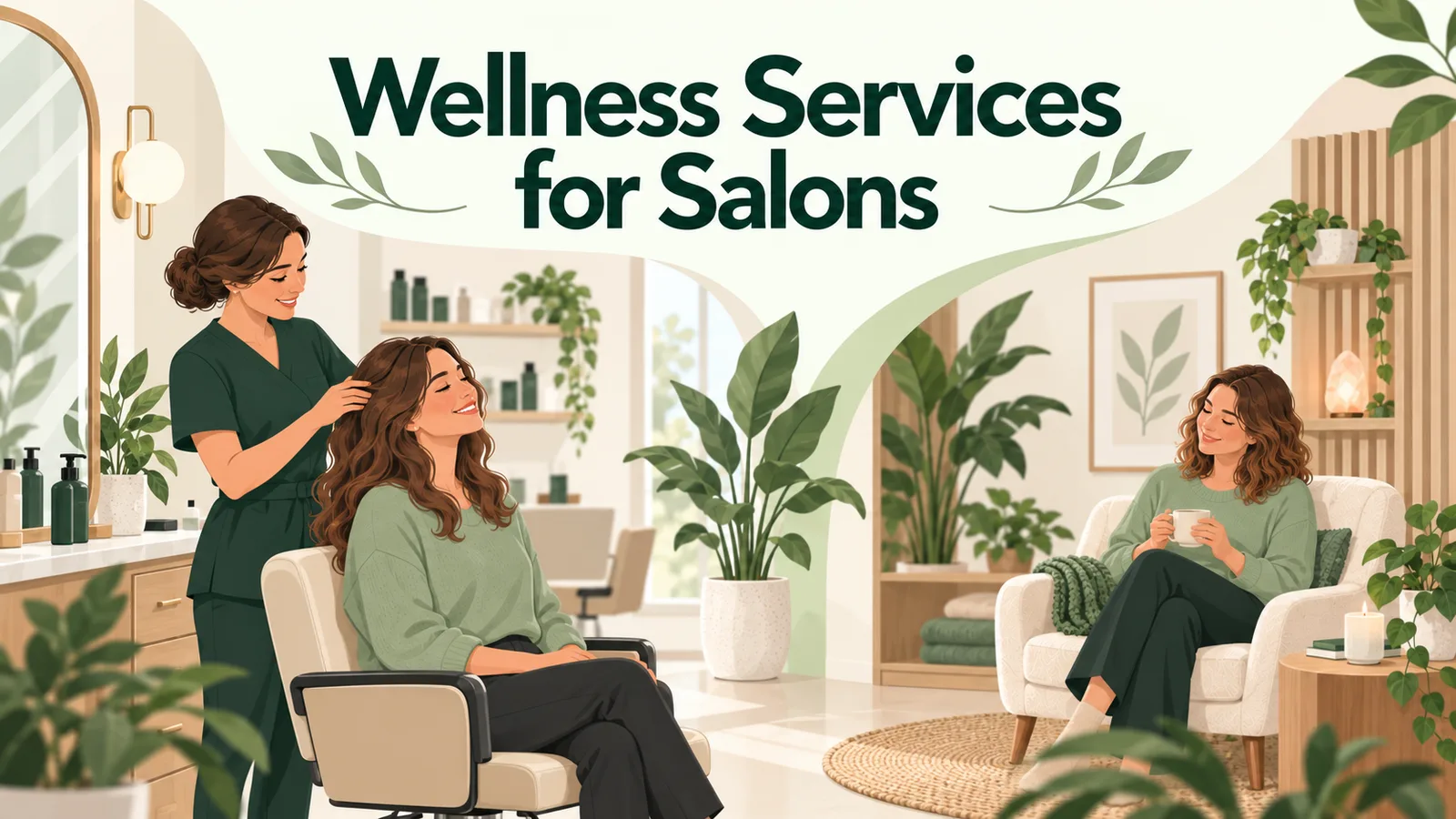
Wellness services that could complement a beauty salon include relaxation appointments, qualified-provider massage, guided movement sessions, everyday wellbeing education and equipment-based warmth or light experiences. Each creates a different visit for the client and a different workload for the salon. The right shortlist depends on the experience you want to add and the resources you can provide.
Think of this as a menu of service directions rather than a ranking. A quiet reclining appointment may suit one salon's private room; a small movement class may fit another business's separate studio. Neither automatically suits a busy open-plan hair salon.
If you first need to identify who might use an addition, start with choosing a wellness service for your existing salon clients. This guide takes the next, different task: understanding what the candidate services actually ask clients and staff to do.
Key Takeaways
- Choose a defined appointment, not a broad label such as “wellness.”
- Compare the client experience, provider role, privacy, room use and preparation for each category.
- A service can be an extension of a salon visit, a separate appointment or an occasional event.
- Qualification, suitability and local requirements need checking for the exact offer.
- Build a short menu of candidates before choosing equipment or redesigning your salon.
Start with the kind of experience you want to add
The most useful distinction is what the client will do. Will they remain seated, recline privately, take part in movement or learn something they can apply at home? These choices make the service tangible before you examine a supplier's offer.
A complementary service should have its own reason for being on the menu. It might offer a quieter experience than the main salon floor, provide access to a qualified practitioner or introduce a planned wellness appointment alongside existing beauty services. Describe that reason without predicting how much clients will spend or how often they will return.
Also decide whether the service belongs beside an existing booking or requires a separate visit. An appointment involving changing, preparation or several stages may be a poor spontaneous add-on even when clients find it appealing. An educational event needs a different booking explanation from a private one-to-one session.
The categories below are planning options. Confirm which exact services your salon could provide; Kenda does not supply every category described here.
A comparison menu for salon owners
Use this table to identify the differences worth investigating. The requirements are questions to confirm for the proposed offer, rather than universal specifications.
| Candidate category | What the client does | Delivery questions for the salon |
|---|---|---|
| Quiet relaxation appointment | Spends a defined period seated or reclining in a restful setting | Can you provide privacy, suitable seating and a clear explanation of what is included? |
| Qualified-provider massage | Receives the agreed hands-on service from an appropriately qualified provider | Who delivers it, what scope applies and how are private preparation and linen handled? |
| Guided movement or introductory yoga | Participates in an instructor-led session | Is there safe usable space, an appropriate instructor and a way to assess participation? |
| Everyday wellbeing education | Attends a general workshop or receives clearly scoped information | Who provides the content and where does general education end? |
| Equipment-based warmth or light experience | Uses a specified device with staff preparation and oversight | Which model, instructions, suitability checks and room conditions apply? |
The table gives you options to investigate. Write the actual appointment below the category name: the content, visit length, provider, price and preparation. Two offers within the same category can have substantially different requirements.
Quiet relaxation appointments: define the service clearly
A relaxation appointment can be built around a defined activity and restful setting. As a hypothetical example, a salon could investigate a privately booked guided relaxation session with an appropriate facilitator: a welcoming explanation, a gentle guided activity and a closing conversation about the experience. This illustrates an appointment to assess, rather than an established Kenda service or a promised therapeutic result.
The commercial question is what makes it a distinct appointment. “A quiet corner” is a space feature; a bookable service needs a description of what the client receives. Specify whether it includes guided relaxation, a trained provider's contribution or a particular equipment experience. Each changes the scope.
A salon that wants to explore this direction should examine sound and interruptions. A room beside hairdryers may look restful in a photograph but feel different during normal trading. Consider how clients arrive, where belongings go and whether the setting permits a private conversation.
Avoid borrowing medical language to make the offer seem more substantial. A restful appointment can be described through its atmosphere and included activities. Sleep disorders, anxiety or other health concerns are separate matters, rather than implied conditions treated by a salon service.
Massage: a provider-led service with its own responsibilities
Massage is a concrete hands-on category that may complement a salon with an appropriate provider and setting. It requires more than adding a treatment bed to an unused room.
The US National Center for Complementary and Integrative Health describes massage as manipulation of the body's soft tissues and recommends asking about a practitioner's training, experience and credentials. Its massage guidance also discusses suitability and risks. This supports careful provider selection; it does not establish the rules for every country or salon.
Compare the exact service, not simply “massage.” The provider should explain its scope, preparation, suitability process and client communication. Staff who book the service need enough information to describe it accurately and route questions to the practitioner.
Decide how the provider works with your salon: employed, contracted, renting space or another locally appropriate arrangement. Confirm responsibilities for records, supplies, cleaning, insurance and cancellations. Do not assume that the salon's existing qualifications or policy cover a new practitioner's work.
This direction is worth investigating when the provider's practice fits the salon's appointment experience. Account for practitioner delivery time and the work around each booking.
Guided movement: participation needs the right space
Introductory yoga or other general movement sessions create an active experience rather than a reclining appointment. They may suit a business with separate usable space and an appropriately qualified instructor.
The NCCIH overview of yoga describes practices involving physical postures, breathing and meditation, while noting that styles differ. For a salon, that means the actual class matters more than the category name. An instructor should specify the session's content, expected participation and adjustments within their scope.
Walk through the proposed activity before adding it to the menu. Consider clothing, movement routes, equipment storage and how other clients use the premises at the same time. A room that holds chairs comfortably may not support the planned movement.
You can also explore an occasional class delivered by a suitable external provider. Define the event arrangements and assign instruction to the agreed instructor, while salon staff manage their own booking and hosting roles.
Everyday wellbeing education: useful when the scope is clear
Educational sessions can complement a beauty salon by giving clients access to practical general information. Possible formats include a qualified provider's workshop on everyday movement or general food-planning habits, or a clearly described introduction to a wellness service.
Choose the provider and content before advertising the event. General information about habits is different from an individual diet prescribed for a health condition. A salon's role might be hosting and organizing the appointment, while a qualified professional takes responsibility for the content within their own scope.
An educational offer also needs a clear description of participation: presentation, discussion, demonstration or individual consultation. Clients should know whether they will receive general materials or personal advice, and what questions the provider can address.
Avoid calling a workshop a complete program if no ongoing service is included. A modest, well-defined event may be more useful than an offer whose name suggests support the salon cannot provide.
Warmth and light options: assess the exact platform
Equipment-based wellness introduces a distinct appointment experience with model-specific requirements. Clients may recline or use a heat-based setting while staff manage preparation, explanation and the chosen service.
Kenda's current equipment overview lists Thermal Nest, Space Therapy Plus and Infra Light. The Plus platform is described as combining dry heat, infrared, red light, PEMF, rhythmic leg massage and heated natural jade stones. These are product features, not evidence that every salon client will achieve a particular health or weight result.
For a candidate offer, request the exact equipment documents and the complete client journey. The device's operating period is only part of the booking; preparation, changing where required, staff communication and room reset also use time. The wellness equipment buying checklist helps organize those supplier questions.
Suitability needs its own process. Kenda's program guidance excludes pregnancy, severe heart conditions, severe hypertension and advanced diabetes. Current device-specific instructions and individual circumstances still need consideration; that program list is not a complete screening tool for every platform.
A warmth or light service is most understandable when staff can explain what happens and what support is included. Avoid making the service sound effortless for the team merely because some of the appointment is spent using a device.
Turn categories into a shortlist you can discuss
Choose a few candidates and write a plain description of each one. Keep categories separate if their provider, room or appointment requirements differ materially.
Use this brief for every candidate:
Working service description: We are considering [specific appointment], where clients [what they do]. It would be delivered by [role or provider] in [setting], with [preparation and complete visit requirements]. Its place on our menu would be [add-on, separate appointment or event]. We still need to confirm [specific missing information].
Then assess how the offer fits actual premises using the wellness treatment room planning guide. The wider guide to adding wellness services addresses readiness once the appointment is defined.
Compare costs as well as space. The US Small Business Administration's planning guidance distinguishes one-time from recurring expenses and includes equipment, supplies, insurance and staff costs. Use that planning principle with local quotes; it is not a forecast of what your addition will earn.
Frequently asked questions
Which wellness service is best for a small beauty salon?
There is no universal best category. Begin with an exact offer that can fit your clients, provider roles and available setting. A service requiring a private room or specialist instruction may be impractical even if its equipment looks compact.
Can I offer a wellness service during a hair appointment?
Check both services' instructions and ask the responsible providers whether the appointments can be combined. Check client position, interruptions, staff attention and preparation. Do not assume that a client's existing appointment time is available for another activity.
Must every new service involve equipment?
No. Qualified-provider appointments and educational events are different routes. Equipment-based experiences are another category. Compare the actual service and responsibilities rather than assuming that buying a device is the starting point.
Can the salon host an external practitioner?
That may be an option, subject to the relevant local arrangements and permissions. Clarify qualifications, scope, insurance, client communication and responsibility for records before treating it as an available service.
Should I add several wellness services at once?
A smaller shortlist makes it easier to understand each candidate's requirements. Define the offers and resolve material questions first. Choosing several categories together can add overlapping room and staffing demands that deserve their own assessment.
Choose an experience you can explain well
A complementary wellness service gives clients a clear reason to consider a different kind of appointment at your salon. Define that experience before choosing a provider or platform, then compare the practical requirements with your business.
If Kenda is one of the options you want to investigate, explore the public partnership overview and contact Kenda Global about your salon. Bring your working service description and questions about the room, staff roles and current offer in your market.